Robotic tank cleaning
Our robots clean storage tanks from the inside while operators control them from outside. No one enters the confined space, and tanks are typically back in service in 3–7 days instead of 10–14.
Why tank cleaning is moving to robots
Petrochemicals, pharmaceuticals, food processing and manufacturing all rely on storage tanks. Cleaning them has traditionally meant sending labourers into confined spaces, which puts lives at risk, stretches downtime and can contaminate the surroundings.
Robotic cleaning removes the person from the tank. Stricter regulation and the push for operational efficiency are making it the expected method across Indian industry. Arham Oil builds and operates its own hydrocarbon waste cleaning robots for this work.
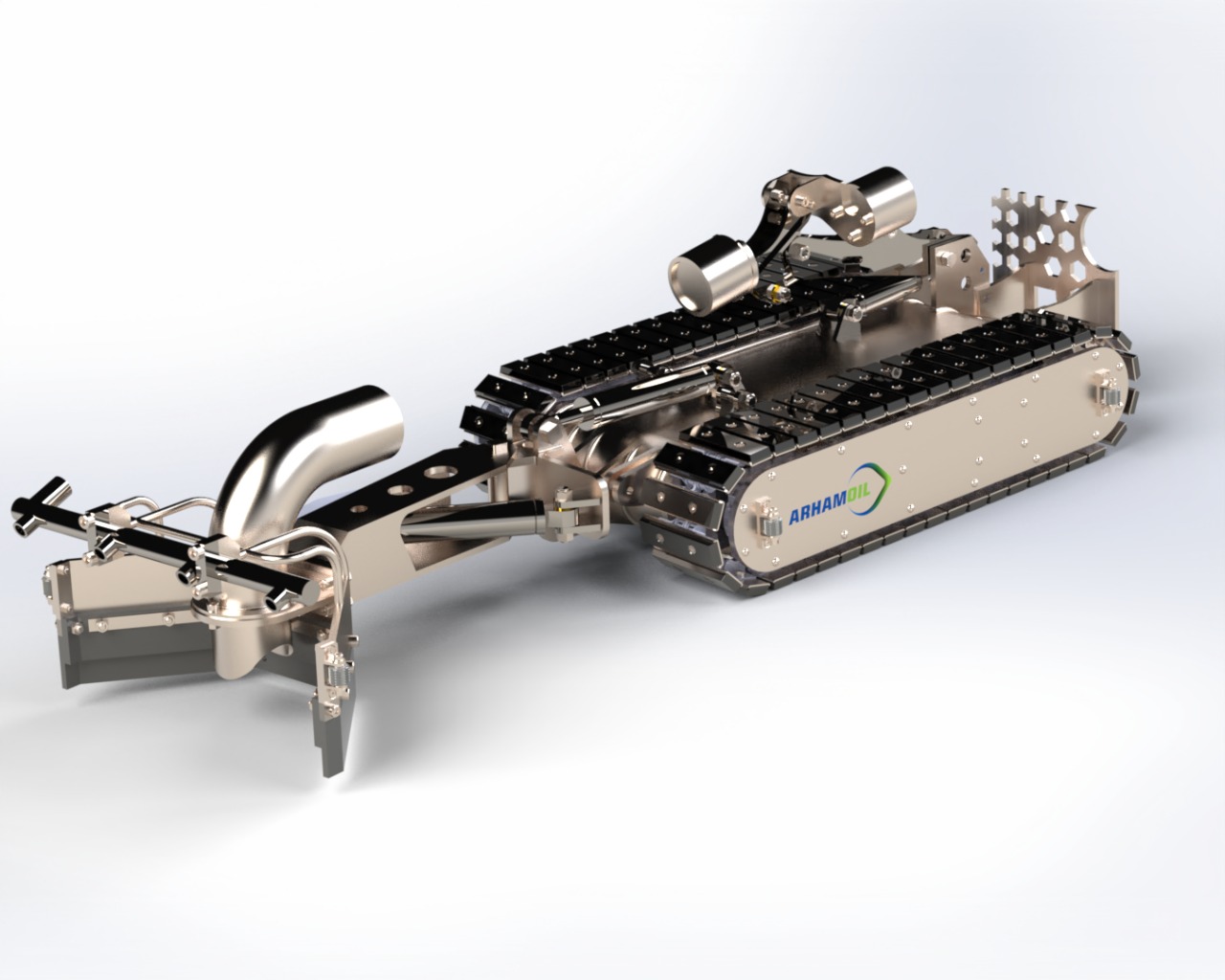
MUSHAQ 2.0
A hydraulically driven robot with a submersible pump on a hydraulic arm. It pumps solids up to 25 mm and mechanically agitates sludge so it can be moved.
Specifications
- Size: 30 × 20 × 8 inches (L × B × H)
- Hydraulic power pack: 15 HP
- Jetting pressure: 1–50 bar
- Suction volume: 5–20 m³ per hour
- Maximum range: 100 m
Applications
- Storage tank cleaning
- Pipeline cleaning
- Cooling tower sump cleaning
- ETP and OWS pit cleaning
Features
- Upper nozzles break up sludge mounds
- Lower nozzles wash the tank floor
- Hydraulic drive
- 3–4 interchangeable auger types
What you get with Arham Oil
ATEX-certified robots
Built to operate in hazardous atmospheres with flammable gases and vapours.
Real-time monitoring
Cameras and sensors let operators watch and steer the cleaning as it happens.
Customised to your tank
We adapt the robot, tooling and method to your tank size, shape and sludge.
Why use a tank cleaning robot
Safety
No confined-space entry. Operators control the process remotely, away from toxic exposure and explosion risk.
Precision
Sensors and control software let the robot navigate complex tank geometries and clean thoroughly.
Lower lifetime cost
Less labour, shorter downtime and higher efficiency outweigh the initial investment.
Environmental compliance
Less water, chemicals and energy used, and less waste generated.
Versatility
Configurable for different tank sizes, shapes and contaminants across industries.
Questions about robotic tank cleaning
Is robotic tank cleaning safer than manual methods?
Yes. Our ATEX-certified robots remove human entry from hazardous environments, eliminating the risk of toxic exposure, explosions and confined-space accidents.
How much does robotic tank cleaning cost?
It depends on tank size and sludge volume. Robotic methods typically save 40–60% compared with manual cleaning by reducing downtime, waste and labour. Robot-as-a-Service (RaaS) plans are available with no upfront cost.
How do the robots clean without anyone entering the tank?
The robots are operated remotely. Operators use live camera feeds and monitoring to steer jetting nozzles and suction from outside the tank.
Can the robots handle difficult sludge such as paraffin or sand?
Yes. Pressure and suction are adjusted to the sludge, whether it is paraffin, sand or a mix.
How long does robotic tank cleaning take?
Typically 3–7 days, compared with 10–14 days for manual cleaning. Robots can work around the clock.
Further reading
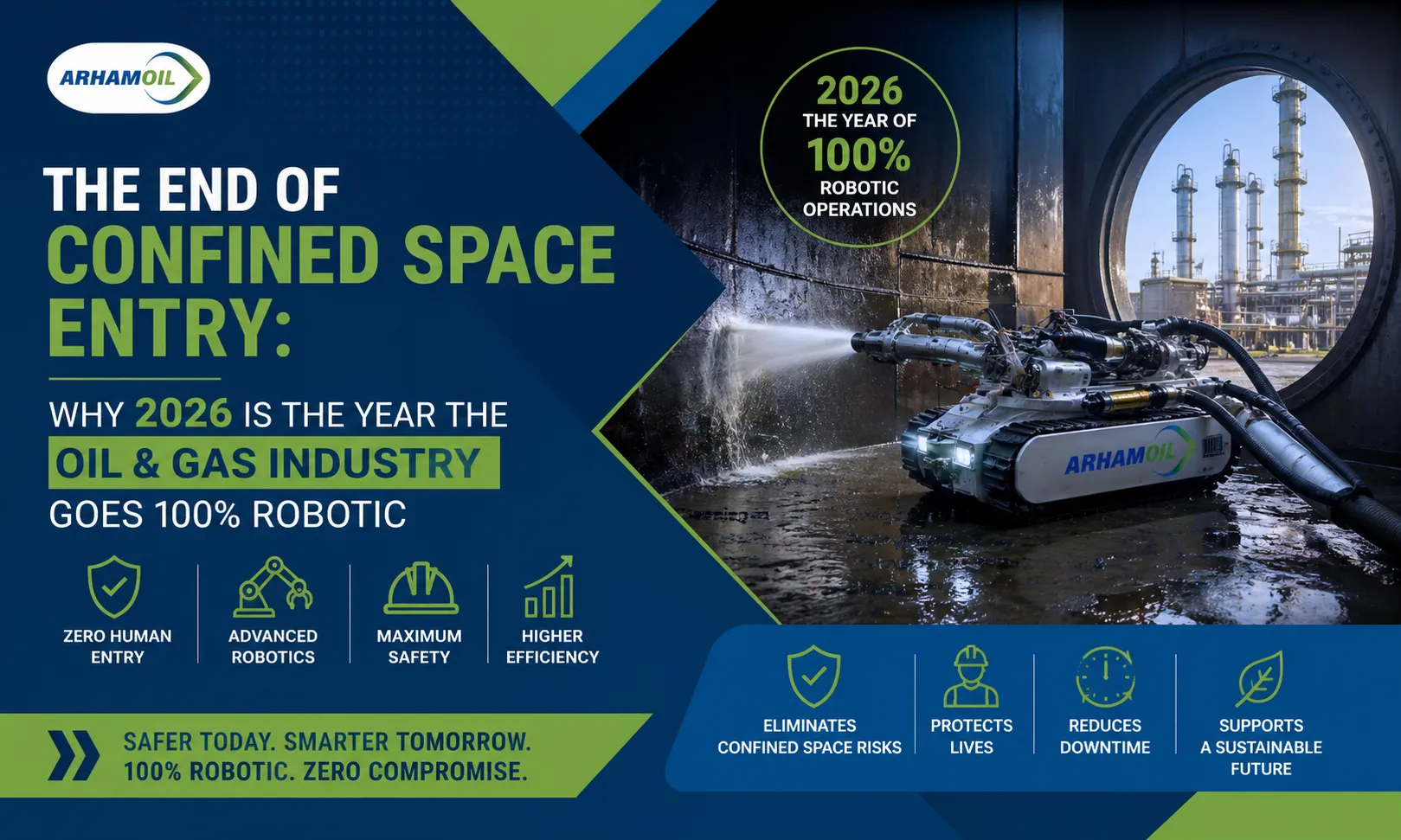
The End of Confined Space Entry: Why 2026 Is the Year the Oil & Gas Industry Goes 100% Robotic
Why sending people into petroleum tanks is on its way out.
Arham Oil Expanding the Robotic Tank Cleaning Services in Russia
Bringing robotic tank cleaning to Russia's refineries, terminals and petrochemical complexes.
Arham Oil Expanding the Robotic Tank Cleaning Services in Southeast Asia
Refineries and terminals across Southeast Asia face pressure to improve safety and reduce downtime.
Other services
Get your tank or lagoon assessed
Tell us the asset, the product it holds and roughly how much sludge you expect. Our engineers will recommend a method and timeline.